
Stories to Inspire
A growing collection of thoughts, learnings, and moments that remind us why we work better together!
Click on any of our featured postcards below to read our latest post,
or scroll down to explore our full archive and revisit all the stories shared so far.


Jun 1, 2025
Key #3 – Prioritize Equity & Power Sharing
25 years ago today was my first day co-creating what was to become the East Scarborough Storefront. What we had back then was a big, empty (rather shabby looking) space in Morningside Mall, community passion and a ton of good will from dozens of grassroots groups and organizations. One memory stands out clearly as the moment I knew this was going to be something different. It was the moment when I met Samsam Ismail, the founder and inspiration behind the grassroots group Horn of Africa Parents Association. She was a regal looking woman who strode into the space with confidence “I hope you’re not going to run this place in the usual euro-centric way” she said to me. That was the moment something clicked for me: this was an opportunity to do things differently.
Over the next 25 years, I learned (and continue to learn) so much from the knowledge and worldviews of the exceptional people connected to the East Scarborough community. Sadly Samsam passed away several years later, however, her legacy and the legacy of so many others live on in what The Storefront has become. Now hundreds of people have been part of The Storefront’s evolution or taken up its inspirational story and adopted and adapted the resulting Connected Community Approach in their own contexts.
Thank you East Scarborough Storefront for all you have given me, all I have learned and the opportunities you have provided for us all to reimagine more equitable, resilient and connected communities.
Jun 2, 2025
Key #9 – Build Creative Infrastructure
In 1999, I walked into a room full of people who changed the trajectory of how I thought about community building.
The preceding years had been distressing, to say the least.
In Ontario, people on social assistance rates had their income reduced by 22% and a swath of cuts left the nonprofit sector reeling. Then, like now, as people’s need for services increased, the sector’s capacity to meet those needs was being rapidly reduced. This was the context for the birth of the East Scarborough Storefront.
Those people, 40 of them, came from grassroots networks, branches of government, and social sector organizations. They were there because one community in East Scarborough was fairing even worse than others in the wake of both provincial and federal policy changes. The people in this community – one of the furthest east in the City and plagued by underinvestment, lack of opportunity and poor transit – had little access to the kinds of social services that would help them manage in a rapidly changing environment.

The 40 people in the room had very little access to money, but what they had was a drive to make a difference, and to do it innovatively and collectively. The old ways weren’t working. They couldn’t go out and secure funds for a brand new multi-service organization, but what they could do was leverage their own mandates and expertise to create a new kind of organization.
The East Scarborough Storefront became an iconic one stop shop for social services. At The Storefront, people could access 40 different types of support, from mental health to youth leadership to employment training and more, in a co-ordinated and seamless way. They started with $5,000, which they used to hire me to help turn a vision for a connected community approach into what became a thriving community hub.
The day we opened the doors, Rob Howarth from Toronto Neighbourhood Centres, told me they lit a candle, because, despite the distressing times, the creation of The Storefront was symbolic of the possibilities of collective community building as a critical driver of social change.
Check out the video below to learn about bringing a Connected Community Approach to neighbourhood resilience:

Jun 3, 2025
Key #7 – Embrace the Messiness
“It’s like the 60’s”, he said.
I was on the subway with Patrick, a Labour Market Manager from the City of Toronto. It was an odd thing to say, but I knew what he meant. We were on our way back from a giant City warehouse that I had known nothing about. I don’t think it exists now, but back in 2001, it was a dusty jumble of a place where old City of Toronto furniture —furniture that was old, broken or outdated—was stored. Patrick had taken me there because we were setting up a hub in East Scarborough, and, unlike many of the hubs I’ve seen since, we didn’t start with a major building renovation and new furniture, we started with a big empty space and very, very little money.
The East Scarborough Storefront began its days in an old, empty library on the third floor of Morningside Mall. The carpets were worn and threadbare, and there were holes in the walls where the stacks used to be. There were no offices, no closets, no reception area—but there were walls and there were bathrooms, and that was enough for us to open the doors.
The furniture and supplies came from a mishmash of places, including the old City warehouse. Most of the furniture was old and clunky and, like the carpet, well worn. But we made it work and we figured out how to turn this big empty space into a lively community hub, as well-used and well-loved as the old furniture.
I think what Patrick meant by “it’s like the 60’s” is that it was about disrupting what was ‘normal’ in the social sector. It was about finding meaning in our work and doing it together using our wits and creativity. The Storefront was a quirky little upstart organization; we didn’t have it all figured out: people from the community, from organizations and government divisions, made the road by walking…together.
Jun 4, 2025
The Connected Community Approach (CCA)
Toronto is often called a city of neighbourhoods. Neighbourhoods differ dramatically for a wide variety of reasons including geography, design, infrastructure, level of investment, social and cultural norms. What makes a neighbourhood is a sense of place…a sense that the place in which you live, work or play matters.
In the East Scarborough community of Kingston Galloway/Orton Park (KGO), the East Scarborough Storefront (The Storefront) has brought an intentionality to place making. KGO’s geography is isolating, its design is built around the car, not the person, the level of investment in infrastructure has historically been inadequate…and yet, residents, businesses, academics, social service agencies and others have, for the past 25 years, been building a community culture based on the idea of connectedness.
In a connected community, neighbours help one another: they clean up the garbage on the streets, they volunteer their time, their talents and their treasure, they create things that beautify a small corner or building front and they talk to each other, greet each other on the street, respond to each other when things are bad and celebrate together the things that matter. I would argue that a connected community is all that, but has the potential to be much more.

The connected community we are building in East Scarborough is one where social service providers have the structures, means, opportunity and will to join forces in creating community supports that are meaningful to people, that work together instead of in isolation and that mutually reinforce rather than duplicate.
A truly connected community is one where the leaders and workers in local businesses and institutions understand their role as part of a connected community, leveraging opportunities to hire and procure and actively participate locally.
A connected community is where people in institutions, businesses, daycares, schools, houses and community centres know who to ask and how to find what they are looking for. Strategic connections support people to influence the things that define their community: its infrastructure, its social supports, its celebrations, its economic and academic opportunities. A strategically connected community supports its members to influence and change both at the neighbourhood and at broader systems and policy levels.
The Connected Community Approach makes a strategically connected community possible. It’s a framework that focuses on connecting local residents, change makers and those larger scale sector or policy roles to create together the community that will positively support its people, a community where people have the freedom, knowledge and opportunity to make meaningful choices about their own and their community’s wellbeing.
As the world gets faster and the pressure of scale permeates decision making discussions, I would suggest that the strategic imperative now is to focus at the neighbourhoods level: after all, neighbourhoods are where people live. Problems of alienation, isolation and polarization are human problems, and neighbourhoods are human scale.
Aug 20, 2025
Key #5 – Learn Together
Reflection by Gabriela Masfarré Pintó, CCA Catalyst
Last March, I joined the first CCA Catalyst cohort, a guided deep dive into the Connected Communities Approach (CCA). The invitation came at just the right time, as I was easing back into work after maternity leave and continuing to reflect on my work in the relationship between place, equity, and wellbeing, which I explored as part of the Healthy Communities Initiative and Canada’s Placemaking Community of Practice.
I found myself particularly drawn to the CCA key Learn Together, which emphasizes the importance of approaching situations with openness and curiosity rather than certainty. This key highlights the importance of our ability to listen to thought-provoking ideas, experiment, and engage with initiatives that may involve unfamiliar or unconventional approaches.

In a constantly shifting context, where “success” becomes a moving conversation rather than a fixed destination, Canada’s Placemaking Community of Practice offered an important space to reflect collectively on the evolving role of placemaking. Moving away from traditional evaluation and accountability models toward collective learning spaces, created opportunities to redistribute power and reimagine how change can happen, bringing diverse voices and perspectives to the table. As one of the program partners (and dear mentor) reminded us throughout the journey, learning and evaluation are not static or isolated activities; when done well, they are embedded within the culture and relational fabric of our work.
When learning becomes the driving force, it opens up possibilities to reshape the questions we ask, making room for plural forms of knowledge to arise and supporting the development of place-specific solutions. Beyond conversations around scalability, shared sense-making is essential to advancing meaningful place-based experiments, breaking down silos, and moving beyond single-issue thinking to foster intersectional connections.
We often overlook the importance of these foundational pieces in creating a culture of shared learning and exploration. At a time when people and organizations with diverse perspectives and mandates need to collaborate to tackle complex challenges, cultivating cultures of shared learning is critical. When built with care, learning infrastructures can play a critical role advancing towards more just and equitable systems. As the saying goes:
“If you want to go fast, go alone, but if you want to go far, go together.”
Aug 21, 2025
Key #7 – Embrace the Messiness
Reflection by Gabriela Masfarré Pintó, CCA Catalyst

I love this slide from Audrey Tang. I keep coming back to it every time I feel frustrated or feel alienated by dominant narratives around technological development. Tang has a rare gift for reframing ideas in ways that reveal hidden power dynamics—and shift them.
I’d like to play with one of those reframes. It’s a small switch, but one that could open up big questions:
Instead of relying on the “objectivity of data”,
let’s explore the messiness of data.
Most public conversations treat data as a given. We often assume everyone shares a common understanding of what “data” means. But, this assumption hides a more dangerous one: that data is objective, neutral, and complete.
However data is not immune to bias. It is a mechanism through which people state their interests, their values and what sort of proof will make them change their mind. Data reflects decisions – what to capture, what to ignore and what counts as evidence. These choices reflect certain worldviews, systems and ways of being in the world. In short, data has tremendous power, but as long as data is about people, it is also far from objective.
As part of the first CCA Catalyst cohort I participated in a guided deep dive into the Connected Communities Approach (CCA). This experience gave me the space to reflect on a recurring question in my work: What does the data say? (Yes… that ongoing wrestle with the “objectivity of data”). One of the keys to unlocking the power of a Connected Community is “Embrace the Messiness”; it is through this lens that I reflected on how to approach questions around data when working in and with community.
One of the most meaningful moments in embracing the complexity of data came during my time with the Ideas for Change team, collaborating with the Knowle West Media Centre in Bristol. In this context, embracing messiness meant stepping away from pushing predefined technological “solutions” and instead co-creating new ways to tackle a very real and urgent issue: dampness in rental homes. This is a widespread problem in Bristol, where 75% of University of Bristol students report issues with damp and mould.
In response, we co-developed a frog-shaped temperature and humidity sensor, an open-source and community informed tool. Its creation was not only a practical intervention but also an invitation: to build local capacity around technology to reimagine how data is collected, shared, and understood. Seen through the lens of Connected Communities, this project deepened my appreciation for the relational, political, and contextual nature of data. Yes, an opportunity to embrace the messiness of data.

We often hear that communities are at the heart of change, yet few initiatives create the space to examine in depth the relationship between people, power, and place. Too often, data is something done to communities, not developed with and by them. This is especially important when engaging with historically marginalized communities as data collection systems can perpetuate stereotypes and biases, invisibilize lived experience, and privilege dominant world-views.
As I move forward in roles and projects rooted in equity, inclusion, and relational practice, I remain committed to reframing the idea of “objectivity” in data. I believe we must all learn to embrace the messiness—because in that mess lies possibility, truth, and the potential for real change.
Dec 3, 2025
Key #2 – Making Community Building Visible
East Scarborough Storefront; a project of Tides Canada
From a Water Tower to a Community Garden
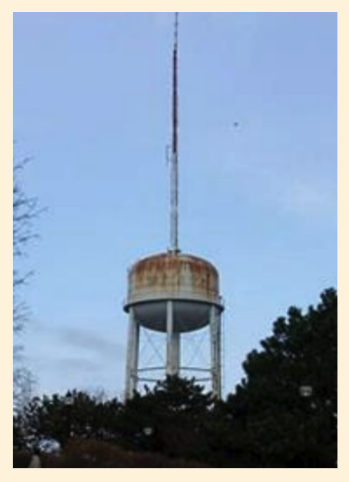
An old rusty water tower stood for 50 years where today we have a vibrant community garden. In the spring and summer of 2008, the City agreed to remove the water tower. The tower was removed section by section over a period of about a week.
At the time, local youth were working on community arts projects at the community hub, and they would watch every day as more and more of the structure would disappear. It was a great opportunity to talk to them about how the structures around us help us connect to a place. The water tower was a local icon, a landmark that helped orient people. Although it was no longer functional, it played a real role in terms of grounding people to the space they were living in; young people would meet up under it, and there are even stories of some intrepid souls climbing to the top of it. It lived large in reality and in legend.
When it was dismantled, it changed the way people saw the space, and it became important to do something to address the sense of place. Residents who had come from cultures in which agriculture was a key part of life expressed interest in gardening, and a process was undertaken in which residents developed what is now known as the Roots of Scarborough East (ROSE) Garden.
The ROSE Garden has more than 30 plots, allocated to community members living in the apartment buildings on Galloway Kingston Road, and Orton Park. Several beds are reserved for community groups and volunteers wishing to grow fresh produce for our local food bank.

The garden provides an opportunity for local residents to learn and practice gardening, to connect with green space, and to build connections with others with similar interest. For many families, the ROSE Garden is an important source of affordable fresh produce.
Dec 4, 2025
Key #9 – Build Creative Infrastructure
East Scarborough Storefront; a project of Tides Canada
From a Mall to a Police Station… A Police Station to a Community Hub

One week in 2005, while The Storefront was housed on the third floor of Morningside Mall, a number of things happened:
– 35 community partners showed up to deliver services to local residents
– youth tutored younger children to help them achieve academic success
– seniors gathered to go walking together, increasing their activity and making friends
– job seekers were able to use computers to work on resumes
– The Storefront found out that it’s funding was going to drastically reduced due to changes in government priorities
– The Storefront was informed that Morningside Mall was being torn down imminently and they needed to find another building to house their good work
Quite a week, right?

Never discouraged by a challenge, the staff at The Storefront put the word out to community members and partners and two wonderful things happened:
– residents and partners organized the SOS or Save Our Storefront March and 300 community members carried signs and sang and chanted to draw attention to the importance of The Storefront
– funders came to the table to creatively problem-solve and figure out how they could use their resources to save The Storefront
And the results were extraordinary:
– the SOS March garnered media attention in both print and television
– funders collaborated to ensure that services did not have to be decreased
– the City of Toronto came forward with a proposal for The Storefront to take over a disused police substation in the neighbourhood
In 2006, we moved into that disused police station…


The first time Storefront staff stood in this building, we were introducing a group of local partners to the space. There was no electricity and no heat. It was the middle of winter and everyone wore coats, but 27 people showed up. The floors were concrete, and the walls were a weird grayish pink shade that can still be seen on the walls in the back hallway. Words that were used to describe the space were stark, institutional and depressing.
Fast forward: through the work of our Community Design Initiative, in which local youth, mentored by architects, planners and designers, reimagined the space, and redeveloped it into what you see before you today: a thriving community hub in which local residents, community partners, staff and volunteers work together to make the neighbourhood great. What this meant practically is that youth learned about engineering and architecture, developed their knowledge about functional design and made all practical decisions about the redevelopment of the space. They learned about things like load-bearing walls, foundational integrity and accessible design.
The way our founder tells the story,
“As long as the decisions were functionally sound and supportive of the work that gets done in the space, youth were given decision-making power.”
Today over 35 community partners, and 8 resident groups use the space to deliver programs, hold meetings and host events. Last year, local residents used this space to connect to services and supports more than 30,000 times.
The space contains a computer lab, an employment centre, a commercial grade kitchen that can be used by resident groups, partners and local entrepreneurs, meeting rooms and community offices.


Jan 19, 2026
Key #6 – Facilitate Collaborative Processes
Reflection by Sarah Fox
Residents Rising: How facilitation got them back on track
“Your idea might be different, but it was worth a conversation. And it didn’t necessarily matter whether that idea gets adopted, but opinions matter and you have the right to voice them”
-Carol
Carol has been a resident in Kingston Galloway/Orton Park (KGO) for almost 35 years. She is an advisor to the resident-led group, Residents Rising, and over the seven years she has been involved with the group, she has witnessed how well people can work together towards a common goal. But she has also endured times of tension with the group, tension that is inevitable when people are planning, discussing and prioritizing.
At a particular time, Residents Rising got sucked into their personal grievances with the group and others in it. The strongest voices in the group were dominating the conversation, and others felt muted and were pushed away. Creativity was lacking and action was becoming stagnant. Residents Rising was stuck.
In situations where people need guidance or to learn more about a specific subject or skill, it is common to turn to the lecture: I tell you what needs to happen, you listen and learn. It is one or two experts relaying their knowledge upon others, without much room for contributions from the listeners.
But in Kingston Galloway/Orton Park (KGO), community members dare to do things differently. Residents Rising was founded on shared values and a belief that community members, at all levels and capacities, have skills to contribute; everyone’s input is of equal worth. These values stem from a community development framework, that does not skip from problem to solution, but explores possibilities together.

To foster a healthy and thriving community, Residents Rising puts People First, and The Storefront is there to assist them using, among other things, facilitation processes.
Facilitation processes put emphasis on the fact that residents have a lot to bring to the table. By focusing on people, facilitation, when done well, can discover the skills and capacities of people; good facilitation helps foster personal growth within residents and explores the ways in which they can lead, participate and contribute together.
In the case of Residents Rising, they had lost sight of why they were there – what their purpose was in the community. Janet, Coordinator of Resident Leadership at The East Scarborough Storefront, facilitated an exercise that is more often used to develop group norms or the “ground rules” within a group.
Janet asked the group three questions: who do you want to be to each other? Who do you want to be in the community? Who do you want to be to the world at large?
“It allowed them to kind of see their organization in all those – from all those different lenses. And I think it opened their eyes a little bit to like, ‘Oh, right. So we could be this.’ It allowed them to be aspirational in a different way”
-Janet
This exercise was not about who is in charge or who is right. And Janet and members of the group did not walk into it with a specific outcome in mind because facilitation doesn’t operate that way. Facilitation focuses on people and the process and accepts the outcome, whatever it may be.

For Carol, Janet’s facilitation was successful in reminding people to think about why they were involved with the group. “I think it made people aware. And it was a good method of getting people to think. ‘Okay yes. What am I doing here? Am I there just because I want to be noticed? Am I there because I have nothing else to do?’“
Residents Rising has numerous projects and initiatives in the community that have and continue to bring joy to residents. The group has been instrumental in representing the voices of residents in KGO, and through organizing, connection and collective action, and programs that enrich the community.
“We’re still rising” -Carol